

Egypt has historically been perceived as one of the moderating influences in the never-too-far-from-explosive Middle East region. In fact, when bombings at a Red Sea resort of Sharm el-Sheikh killed 88 people, the region's relative tranquility was shattered.
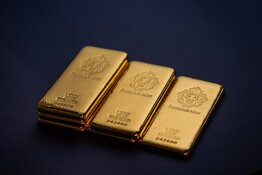
Gold, perfectly reflecting its role as a barometer of global instability, dutifully climbed from $425–$447/oz. by August 11, rising 5%.
Gold is now trading in a sideways range. . .and now the instability that started in Tunisia is spreading.
While the oil price is strengthening, gold's is doing the opposite. There are a number of reasons for that, according to Midas Letter Editor James West.
"The prices of both gold and silver are subject to the investment interests of so many diametrically opposed groups that volatility has become the only constant," West says, "You've got the U.S. government, its collusive partners in Treasury and J.P. Morgan stacking up huge short positions on the futures side; because the spot price is determined by future contract interest, they are easily able to influence sentiment in the market. In other words, the spot price rarely reflects the true value of gold compared to the USD. There is a continuous effort to optically discount gold relative to the U.S. dollar to try and make U.S. Treasuries more attractive to big sovereign investors.
So does that mean gold is going to rise?
"Oh you better believe it," said West. "This political fire that started in Tunisia. . .has now thoroughly taken hold in Egypt. . .and is going to topple Jordan, too, possibly. And Yemen is right behind. You can bet the Saudi's are very nervous at this point. All of this is equivalent to immense pressure building for gold, silver and oil prices. Gold, particularly, could explode through $2,000 before year-end if this situation worsens."
Gold, perfectly reflecting its role as a barometer of global instability, dutifully climbed from $425–$447/oz. by August 11, rising 5%.
Gold is now trading in a sideways range. . .and now the instability that started in Tunisia is spreading.
While the oil price is strengthening, gold's is doing the opposite. There are a number of reasons for that, according to Midas Letter Editor James West.
"The prices of both gold and silver are subject to the investment interests of so many diametrically opposed groups that volatility has become the only constant," West says, "You've got the U.S. government, its collusive partners in Treasury and J.P. Morgan stacking up huge short positions on the futures side; because the spot price is determined by future contract interest, they are easily able to influence sentiment in the market. In other words, the spot price rarely reflects the true value of gold compared to the USD. There is a continuous effort to optically discount gold relative to the U.S. dollar to try and make U.S. Treasuries more attractive to big sovereign investors.
So does that mean gold is going to rise?
"Oh you better believe it," said West. "This political fire that started in Tunisia. . .has now thoroughly taken hold in Egypt. . .and is going to topple Jordan, too, possibly. And Yemen is right behind. You can bet the Saudi's are very nervous at this point. All of this is equivalent to immense pressure building for gold, silver and oil prices. Gold, particularly, could explode through $2,000 before year-end if this situation worsens."