

Canada's mining sector is riding high on strong commodity prices — but a deepening shortage of skilled workers threatens to slow its growth, the Mining Industry Human Resources (MiHR) Council warned, the Canadian Mining Journal reported on October 23, 2025.
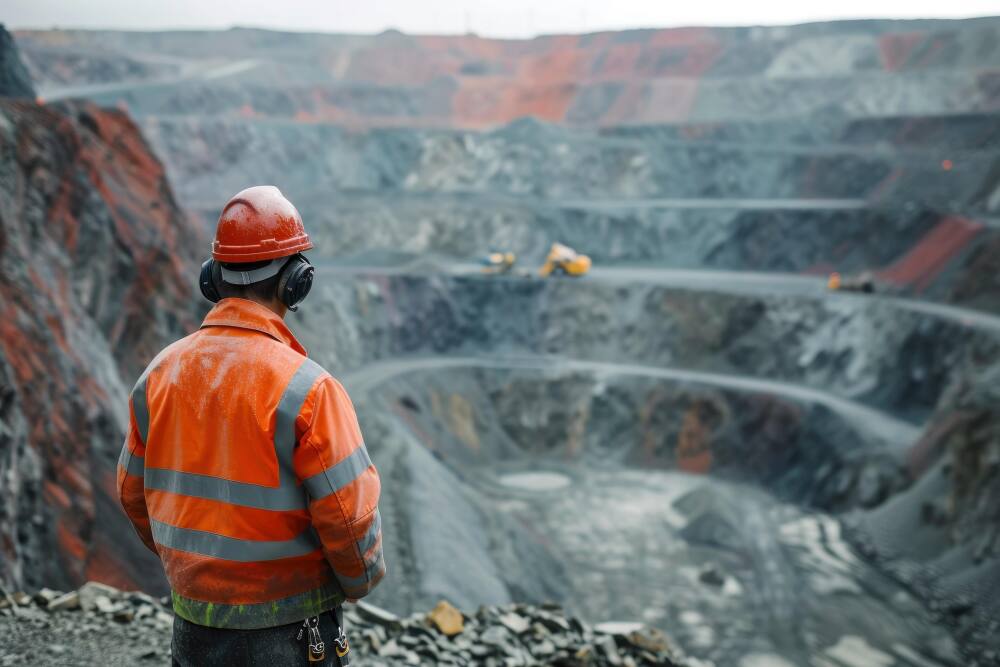 For now, labor conditions favor employers, said Gustavo Jurado, senior labor market economist at MiHR, an independent non-profit that studies labor issues across the industry, who laid out the picture at a MineConnect forum in Sudbury in October 2025. But that is largely because the pool of available workers is running dry.
Roughly 100,000 Canadians work in mining and quarrying, with another 85,000 to 95,000 in mining supply and services, both record highs, yet the workforce has not grown to keep pace with demand.
"Unemployment rates are historically low, which is a sign that employers are starting to exhaust their labor pools," Jurado said. Canada's overall unemployment sits near 7%, he noted, but mining and quarrying have run between 4% and under 1% over the past four years. "This is pointing to chronic labor shortages," he added.
MiHR's 2026 Canadian Mining Labor Market Outlook puts numbers to it. Through 2035, the sector will need to hire about 246,000 workers under its baseline scenario — dropping to roughly 161,000 if the economy contracts and rising to nearly 329,000 if mining expands as governments are betting it will. "These are large numbers of skilled workers we'll need to hire," Jurado said.
Little of that demand comes from growth: only about 14% of the baseline hires, some 34,000 positions, are net new jobs, while the other 86%, more than 212,000 openings, come from replacing workers who leave, about 150,000 exiting the industry and 63,000 leaving the workforce altogether, many to retirement. The sector, in other words, must recruit at scale just to hold its ground — and it starts from a tight position, with the extraction and milling workforce at about 208,500 in 2025, unemployment down to 2.6% by the fourth quarter, and vacancies at 1.8%. MiHR expects the squeeze to peak around 2027, when it projects nearly half of all hiring requirements will be hard to fill. Clear that bar and mining employment could grow about 16%, to roughly 242,000 by 2035; fall short, and the gap becomes the ceiling on how fast Canada can build the mines its critical-minerals ambitions depend on.
The harder problem is who will fill those roles, MiHR noted. The workforce is aging, and the share of workers under 25 has halved over 35 years, from 12% to 6%. In a recent poll, young people called the industry "hard," "dangerous," "dirty," and linked to "pollution," and two-thirds of those aged 15 to 30 said they would not, or definitely would not, work in mining. "If we want the next generation to fill retiring roles, we must convince them that mining is an option," Jurado said.
Two Veterans, One Warning
Rob McEwen built Goldcorp Inc., which was acquired by Newmont Corp. (NEM:NYSE; NEM:ASX) in 2019, and now chairs McEwen Inc. (MUX:TSX; MUX:NYSE ). He called labor the single biggest challenge facing the business. "Labor. There's a very acute shortage of talent in the industry, and it's a function of two factors. One, there are a lot of people retiring," he said in a recent interview with Mining.com posted on YouTube. The second factor is the empty end of the pipeline. "There's not many people coming into the industry," he said, blaming an education system that spent years treating mining as "a very environmentally destructive industry" that "should be shunned." The result, in his telling: "enrollment in mining schools, anything related to mining and geology, fell precipitously in the last 20 years. So, you don't have a new group of people coming in at the same time as metal prices are taking off, and everybody wants to build a mine. So, there's an intense competition for labor right now."
Quinton Hennigh — an industry veteran with more than 40 years in the sector and chief executive officer of private global silver and zinc company San Cristobal Mining Inc. — traced the shortage to a chronically "undercapitalized" industry forced to make discoveries and train workers at the same time, and he describes the same missing generation. "We have very few mining professionals entering this field," Hennigh told Streetwise Reports last year. "There's practically no significant influx of geologists, engineers, metallurgists, and others into the mining sector. Meanwhile, other industries like tech have expanded rapidly. Mining, not so much. That's a problem we need to address." The recent surge of capital into gold, he added, is a "double-edged sword": the money has arrived, but "We lack the workforce necessary to meet global demands."
Both men land on the same prescription. "We need to train the next generation of mining professionals," Hennigh said. "Otherwise, I don't see how we'll resolve this dilemma." Even Washington's response — the more than US$180 million in U.S. government funding for mining education that McEwen welcomed — will be slow to bite: "We have to augment our labor force," he said, "but that's going to take 10 years before it really has a big effect."
In the meantime, McEwen expects the shortage itself to change how mines are run. "I do think the industry, because of the labor shortage, is going to move to greater automation and use of robotics," he said.
A Shrinking Pipeline and Washington's Answer
The gap goes beyond engineers. In a May 2023 analysis, the Center for Strategic & International Studies (CSIS) argued that the U.S. will need not just more mining engineers but more workers of every kind, a problem that the rising critical-minerals demand has only intensified.
"More than half the current domestic mining workforce will need to be retired and replaced by 2029," it wrote, roughly 221,000 workers. "This number stands in stark contrast to the total of just 327 degrees awarded in 2020 in mining and mineral engineering, and a 39% net drop in graduations in the United States since 2016. University programs tasked with creating this workforce have also been decreasing, with the number of mining and mineral engineering programs in the United States dropping from 25 in 1982 to 15 in 2023." The slide has continued: fewer than 600 students were studying mining engineering in the U.S. in 2023, down from nearly 1,500 eight years earlier.
Washington has begun to respond, moving from proposal to money. On Aug. 7, 2026, the Trump administration announced more than US$180 million for mining education: a US$100 million Department of Energy grant program to expand the mining and critical-minerals workforce, plus more than US$80 million from the military directed to three schools: US$32.7 million to the Colorado School of Mines, US$25 million to the South Dakota School of Mines and US$23.6 million to Johns Hopkins University. "For years, mining schools and colleges that are essential to training the future leaders of this industry have been absolutely and sadly disappearing," President Donald Trump said.
The legislative track behind that push is still moving. The Mining Schools Act of 2025 (H.R. 2457), introduced March 27, 2025, by Representative Burgess Owens (R-UT), would require the Secretary of Energy to award up to 10 technology grants a year to mining schools — prioritizing geographic diversity and region-specific specialties — to fund programs in mining technology, critical-mineral exploration, and environmental-impact reduction. It would also create a six-member Mining Professional Development Advisory Board to evaluate applications, recommend recipients, and oversee the use of funds. The House bill remains before the committee; a Senate companion, S. 1130, has also been introduced.
Even at Record Prices, Mining Stays Expensive
The labor squeeze lands on an industry that is already costly and slow to build in. Even with gold at record highs, turning a discovery into a producing mine takes years of capital and patience, and a thin pool of skilled workers only adds to the bill. McEwen said investors routinely underestimate that grind. "They don't appreciate the time to bring a project from discovery to a size that you could say, I'm going to put a feasibility study on it and build it," he said. "But then there's — you have to get a permit to build, and the regulations." Those costs build at every stage — exploration, engineering, permitting, construction — and the labor shortage compounds them, pushing up wages and stretching timelines.
The pressure shows up in the numbers. Gold producers' all-in sustaining costs averaged US$1,785 per ounce in the first quarter of 2026, up 16% from a year earlier, according to the World Gold Council, the 28th consecutive quarter of year-over-year growth in gold miners' all-in sustaining costs (AISC). Record prices have more than kept pace, lifting margins to about US$3,076 per ounce, but the trend line is unmistakable: it keeps getting more expensive to pull an ounce out of the ground, with rising royalties the single biggest contributor and labor an intensifying one.
The upshot for investors: in a high-cost business where costs only ratchet higher, the edge goes to companies with the capital, permits, and people to actually deliver. Three names fit that profile, each advancing projects with significant financing or funding support for the gold or the critical minerals the market that Washington increasingly wants: Perpetua Resources Corp. with antimony, Allied Critical Metals Inc. with tungsten, and Seabridge Gold Inc. with gold and copper.
Perpetua Resources Corp.
Antimony is exactly the kind of metal Washington is now scrambling to secure — and Perpetua Resources Corp. (PPTA:TSX; PPTA:NASDAQ) said it is positioning its Stibnite project as the nearest-term domestic source of it.
 Streetwise Ownership Overview*
Perpetua Resources Corp. (PPTA:TSX; PPTA:NASDAQ)
| Strike Price | Number | Expiry Date |
|---|---|---|
| $31.46 | 953,743 | 10/28/26 |
| $31.46 | 397,393 | 10/28/26 |
| $31.46 | 133,333 | 12/01/26 |
| $34.95 | 953,743 | 10/28/27 |
| $34.95 | 397,393 | 10/28/27 |
| $34.95 | 133,333 | 10/28/27 |
| $38.45 | 953,743 | 10/28/28 |
| $38.45 | 397,393 | 10/28/28 |
| $38.45 | 133,333 | 10/28/28 |
| Date | Old Symbol | Old Shares | New Symbol | New Shares |
|---|---|---|---|---|
| 02/18/21 | MDRPD:NASDAQ | 1 | PPTA:NASDAQ | 1 |
| 02/18/21 | MAX:TSX | 1 | PPTA:TSX | 1 |
| 01/29/21 | MDRPF:NASDAQ | 10 | MDRPD:NASDAQ | 1 |
| 01/29/21 | MAX:TSX | 10 | MAX:TSX | 1 |
| 12/16/02 | E:TSX | 1 | MAX:TSX | 1 |
Perpetua reached a significant funding milestone after the U.S. EXIM Board unanimously approved a US$2.9-billion senior secured loan facility for the development of the Stibnite Gold Project in Idaho. Combined with US$574.2 million in unrestricted cash at the end of the quarter, the proposed financing could cover the project's estimated US$2.576 billion in direct construction expenditures once the EXIM facility is finalized. The project would position Perpetua as a U.S. source of the critical mineral antimony while advancing a large, high-grade open-pit gold development and restoring an abandoned brownfield site in central Idaho.
The financing approval, granted May 21 through the Make More in America Initiative, remains subject to definitive agreements and customary closing conditions, with Perpetua expecting to complete the facility later this year. Meanwhile, the company has already started work on critical infrastructure, including the Burntlog Route, worker accommodations, and administrative facilities, providing a pathway toward its targeted 2029 production start. Federal permits are in place, and court decisions have allowed construction to continue while certain legal matters remain unresolved.
Perpetua reported continued advancement of critical-path construction at Stibnite following federal approvals obtained in 2025 and the start of early-stage and priority construction work, according to an August 31 release. The company said the latest developments provide shareholders and local communities with a clearer picture of progress at the site.
"We continue to see tangible progress at Stibnite," said Jon Cherry, president and chief executive officer of Perpetua Resources. "From the arrival of new infrastructure on site and advancements in equipment fabrication to exciting drilling results, this update demonstrates the momentum, focus, and disciplined execution our team is bringing to the project."
Construction is gathering pace across Stibnite. Fabrication of the project's two autoclaves — key long-lead equipment for the processing plant and gold-recovery system — is underway at a specialized European facility, and Perpetua is installing permanent, year-round workforce housing, with about half of the ATCO modular units on site by late August 2026. Work is also advancing on the administrative pad and the Burntlog Route, which the U.S. Forest Service selected as its preferred alternative and which will serve as the primary access road to the remote Idaho site.
Exploration activity has accelerated following the substantial mineralization encountered during the winter drilling campaign. Four rigs are currently operating across prospective targets, with approximately 5,800 meters completed out of the newly planned 10,000-meter program.
Stibnite combines substantial gold resources with plans to establish a domestic antimony supply chain. Perpetua is simultaneously rehabilitating the existing brownfield area, progressing detailed engineering, and procuring long-lead equipment. President and CEO Jon Cherry said second-quarter activities included the beginning of seasonal construction, continued delivery of worker housing, and exploration that produced encouraging high-grade results.
Exploration continues to offer additional growth potential beyond the current mine plans. Perpetua's July investor presentation cited an intercept of 49 meters grading 5.42 grams per tonne (g/t) gold at Yellow Pine and another of 106 meters grading 3.16 g/t gold at Hangar Flats, along with historical high-grade results from targets including Garnet and Upper Midnight. The company plans additional step-out and definition drilling during 2026 to extend these mineralized areas and potentially convert inferred resources into higher-confidence categories, although work outside the currently permitted project could require further regulatory approvals.
The company is also examining opportunities involving other critical minerals, including tungsten, and is seeking U.S. government backing for evaluation of the potential resource across its land package. Its July presentation identified several additional conceptual exploration targets around existing deposits and airborne anomalies.
Market conditions also provide a broader backdrop for the project. The antimony market is projected by Fortune Business Insights to expand from US$1.22 billion in 2026 to US$2.01 billion by 2034, driven by demand from flame retardants and defense applications and the concentration of global supply in China. Tungsten demand is also increasing, with one July market estimate placing the global market at US$6.66 billion in 2026, while ChemAnalyst reported that U.S. tungsten prices stabilized in July as supply tightened and interest in domestic projects grew.
Analysts have continued to point to the financing and development progress in their coverage.
On June 2, Roth Capital Partners' Mike Niehuser maintained a Buy rating and US$32.00 target, citing the EXIM facility, early construction activity, and further exploration potential at Hangar Flats and Yellow Pine.
National Bank of Canada Capital Markets' Rabi Nizami reiterated an Outperform rating and CA$55.00 target on May 22, highlighting the funding cushion and 13-year loan term while identifying Stibnite as a potential M&A opportunity because of its size and critical minerals significance.
BMO Capital Markets' Brian Quast also retained an Outperform rating and CA$47.00 target on May 25, saying the financing is expected to cover direct construction costs.
According to TipRanks, RBC Capital's Josh Wolfson maintained a Buy rating and US$42 target on June 4 (about 70% upside), B. Riley Securities' Soundarya Iyer lowered her target to US$30 from US$40 while keeping a Buy on August 3 (about 22%), and H.C. Wainwright's Heiko Ihle reiterated a Buy at a Street-high US$43.50 on August 18 (about 77% upside).
1The company has 125.1 million shares issued and outstanding. On an undiluted basis, Paulson & Co. owns 25.86%, Agnico Eagle Mines Ltd. (AEM:TSX; AEM:NYSE) owns 6.4%, and JPMorganChase holds 2.6%.
About 46.49% is owned by institutions, about 6.4% by strategic investors, and about 0.57% by insiders and management. The rest is held by retail.
The company trades within a 52-week range of CA$23 and CA$51.10 per share, commanding a market capitalization of approximately CA$4.37 billion.
Allied Critical Metals Inc.
Tungsten is exactly the kind of metal the West is racing to source outside China, a defense-critical input whose supply is heavily concentrated there, and Allied Critical Metals Inc. (ACM:CSE; ACMIF:OTCQB; 0VJ0:FSE) is angling to become a Western supplier of it.
The company has applied to list its common shares on the Nasdaq Capital Market as it advances its Borralha and Vila Verde tungsten projects in Portugal, a move to broaden its access to U.S. capital as demand for the metal climbs. The listing still depends on meeting Nasdaq's requirements, obtaining the necessary regulatory clearances, and completing the customary process, Allied noted, cautioning that approval or completion is not guaranteed.
Streetwise Ownership Overview*
Allied Critical Metals Inc. (ACM:CSE; ACMIF:OTCQB; 0VJ0:FSE)
| Date | Old Symbol | Old Shares | New Symbol | New Shares |
|---|---|---|---|---|
| 04/30/25 | DEEP:CSE | 40 | ACM:CSE | 1 |
"We believe that a Nasdaq listing will provide us with access to a broader investor base, increased sources of potential capital, increased research coverage from U.S. investment banks, and improved trading liquidity for Allied's common shares as we focus on generating shareholder value by unlocking the potential of the Borralha tungsten project and Vila Verde tungsten project," Chief Executive Officer Roy Bonnell said. "We look forward to enhancing our capital markets profile by increasing our investor relations efforts and achieving our strategic objectives."
Allied is also pursuing the closing of a US$25-million non-brokered equity financing at US$2.05 per share, alongside a separate US$15-million project-financing facility, involving an existing strategic investor and a new strategic investor, with the current backer reaffirming its commitment to backstop the new participant's investment.
The global tungsten market continues to benefit from demand across mining, construction, automotive, aerospace, defense, and industrial applications. Fortune Business Insights estimated the market at US$5.43 billion in 2025 and US$5.78 billion in 2026 and projects it could reach US$9.19 billion by 2034, a 6.0% CAGR from 2026 through 2034. Asia Pacific represented 71.64% of the market in 2025, while the growing use of wear-resistant tools and high-temperature components remains an important demand driver.
The report stated, "A prominent trend in the market is the rising demand for high-performance wear-resistant tools across the industrial sector." It also cited International Tungsten Industry Association figures indicating that cemented carbides account for roughly 60% to 65% of global tungsten consumption, including cutting and drilling tools and industrial wear components.
Ventum Capital Markets analyst Surya Sankarasubramanian reiterated a "Buy" rating on June 18 and lifted the firm's target to CA$2.95 from CA$2.75. His assessment preceded Allied's subsequent disclosure of drilling results from the Venise Breccia. "We like Allied because it offers near-term production potential through Vila Verde and longer-term scale potential through Borralha, where current exploration is poised to augment that potential," he wrote.
Diamond Equity Research retained a CA$3.50 valuation in a July 13 company-sponsored research update, when Allied's shares traded at CA$2.30. Analyst Hunter Diamond highlighted the newly identified Venise Breccia as an additional avenue for expanding Borralha's resource base beyond current development assumptions, writing that it "meaningfully enhances Borralha's exploration profile by introducing an additional avenue for future resource growth beyond the assumptions incorporated in the current PEA." The CA$3.50 figure assigns no value to the Venise Breccia, which remains at an early exploration stage and is not yet in a compliant resource estimate. Diamond Equity disclosed that Allied paid US$50,000 for the sponsored research, billed annually.
Allied has begun its 20,000-meter 2026 drilling campaign at Borralha, targeting resource expansion and the possibility of extending the initial 11-year mine plan outlined in the PEA. The company estimates that only about half of the Santa Helena Breccia has been drilled, making the zone and the wider property priorities for continued exploration. Borralha received its Environmental Impact Declaration in January 2026 and is progressing through Portugal's mine-licensing process with APA and DGEG, while Allied currently targets first tungsten concentrate production from the Vila Verde Pilot Plant in Q4 2026 and advances Borralha toward future development.
At Vila Verde, Allied is advancing under an experimental mining framework that could permit processing of up to 150,000 tonnes of mineralized material a year until a full mining license follows a feasibility study. Construction of a Vila Verde pilot plant is planned for 2026, with initial tungsten concentrate production targeted for the fourth quarter and capacity that could later expand to 300,000 tonnes a year. The pilot is backed by a binding US$15-million project-financing facility that may be structured as a bond issue or senior secured term loan, and Allied holds a binding five-year offtake agreement covering half of the plant's tungsten concentrate output, subject to a 2026 floor price of US$1,000 per MTU, with provisions allowing purchases by the U.S. Department of War and Portugal's Ministry of Defense. It has also signed a letter of intent with Global Tungsten & Powders in Pennsylvania and continues discussions with other international refiners for the remaining production.
1Allied Critical Metals Inc. has a market cap of CA$388.15 million, with 184.21 million shares outstanding. The company's 52-week range is CA$0.33-CA$2.48.
Institutions own 16% of shares, while Management and Insiders own 31%. The remaining 53% of shares are held by Retail.
Seabridge Gold Inc.
Seabridge Gold Inc. (SEA:TSX; SA:NYSE) carries the same profile at the largest scale: one of the world's biggest gold-copper projects, permitted for construction, that needs capital to build — and is now lining it up. In its financial and management filings for the three and six months ended June 30, reported earlier in August, the company highlighted continued progress on the 2026 KSM field program and preparations for the feasibility study, and disclosed access to a US$100 million short-term credit facility as it negotiates a potential earn-in joint venture with a preferred partner, a structure designed to fund construction without diluting shareholders. During the period, Seabridge also issued its 2025 Sustainability Report, completed the Courageous Lake spin-out, and received the Smithers Resource and Mining Excellence Award, while the British Columbia Supreme Court upheld the province's "Substantially Started" determination for KSM as reasonable but directed additional consultation with the Tsetsaut Skii km Lax Ha.
Streetwise Ownership Overview*
Seabridge Gold Inc. (SEA:TSX; SA:NYSE)
Seabridge posted net income of US$117.5 million, or US$1.08 per share, for the second quarter, compared with US$12.3 million, or US$0.12 per share, a year earlier, with the increase largely stemming from gains tied to the Courageous Lake distribution. The company invested US$32.5 million in mineral interests, property and equipment during the quarter, compared with US$21.1 million in the same period of 2025, while net working capital declined to US$53.6 million from US$109.8 million at the end of last year.
The newly established financing provides Seabridge with up to US$100 million that it can access in minimum US$10 million increments to support KSM's ongoing work. The facility carries a 7% interest rate compounded monthly, with interest capitalized until its Dec. 31, 2026, maturity date, and the company can repay it in cash or, subject to applicable conditions and Toronto Stock Exchange approval, settle the balance with common shares. Seabridge said it had not drawn on the facility when it announced the arrangement, but expects to use it as needed to strengthen liquidity.
Stonegate Capital Partners analyst Dave Storms said on Aug. 20 that Seabridge's second-quarter 2026 results improved the outlook for advancing and funding KSM. He viewed the US$100 million unsecured short-term loan as another indication of confidence in the project, and considered the quarterly earnings less meaningful because the net income largely reflected a one-time gain from the Courageous Lake distribution.
Storms identified KSM as Seabridge's primary potential catalyst for a valuation reset, with the most important developments focused on creating a new ownership and financing structure rather than expanding the resource estimate. Activities at five camps support the geotechnical, metallurgical, geochemical, and environmental work required for the feasibility study. KSM remains on schedule, with UTCAR 40% complete, TCT construction expected to finish in the fourth quarter of 2026, and the feasibility study still planned for the second half of 2027. Storms added that regulatory matters have not interfered with the project's work programs.
For his valuation, Storms applied an EV/NAV range of 0.8x to 0.9x, resulting in values between US$63.97 and US$72.37 and a midpoint of US$68.17. His EV/In-Situ methodology produced a range of US$61.49 to US$83.07 using multiples of 6.0x to 8.0x, with a resulting price target of US$72.28.
Cantor Fitzgerald analyst Mike Kozak on July 20 described the financing as moderately positive because it gives Seabridge more capacity to fund feasibility-stage work at KSM while pursuing a joint venture intended to enhance the project's value without immediately diluting shareholders. He continued to expect a JV transaction in 2026 and suggested that the short duration of the facility and identity of its strategic backer could point to a potential deal announcement before year-end.
Kozak retained his Buy rating and CA$66 price target, which implied approximately 115% upside when his report was issued.
"The company's flagship 100%-owned KSM project is among the world's largest development-stage gold-copper projects," Kozak noted. "It is permitted to commence construction and is scoped to produce +1.0 MMoz Au (million ounces gold)/year (plus by-products) over a multi-decade mine life."
RBC Capital Markets analyst Josh Wolfson maintained an Outperform rating and US$71 target on June 4, implying roughly 108% upside from Seabridge's US$34.05 closing price that day. Separately, TipRanks reported that B. Riley Securities analyst Soundarya Iyer kept a Buy rating while reducing the firm's target to US$40 from US$65.
1As for Seabridge, management and insiders hold approximately 2% of the company, while institutions own about 59%. The remainder is held by retail investors.
There are around 107.87 million shares outstanding, with the company having a market cap of CA$4.88 billion and trading within a 52-week range of CA$22.19 to CA$50.77.
Common Investor Questions
What is the core problem this story identifies? A deepening shortage of skilled workers across the mining industry, driven by a wave of retirements at one end and too few new entrants at the other, just as record metal prices and surging critical minerals demand push companies to build. As McEwen put it, "there's an intense competition for labor right now."
How severe is the shortage in Canada? MiHR's 2026 Canadian Mining Labor Market Outlook projects the sector will need to hire about 246,000 workers through 2035 under its baseline scenario, ranging from roughly 161,000 in a downturn to nearly 329,000 in an expansion. Strikingly, about 86% of that need comes simply from replacing departing workers rather than growth, and MiHR expects nearly half of all hiring requirements to be hard to fill as demand peaks around 2027.
And in the United States? The pipeline is thinning fast. CSIS found that more than half the U.S. mining workforce, roughly 221,000 workers, will need to be replaced by 2029, against just 327 mining-and-mineral-engineering degrees awarded in 2020 and a drop in U.S. programs from 25 in 1982 to 15 in 2023. Washington has responded: in August 2026, the Trump administration announced more than US$180 million for mining education, and the Mining Schools Act of 2025 is moving through Congress.
Why does a labor shortage matter to investors? It compounds an already high-cost, slow-to-build business. Gold producers' all-in sustaining costs averaged US$1,785 per ounce in the first quarter of 2026, up 16% and the 28th straight annual increase, according to the World Gold Council. In that environment, the edge goes to companies with the capital, permits, and people to actually deliver, rather than those still trying to line them up.
Which companies does the article highlight, and why? Three that fit that profile. Perpetua Resources Corp. has its final federal permit for the Stibnite gold-and-antimony project in Idaho and a US$2.9 billion EXIM loan approval toward building it, with antimony a defense-critical mineral. Allied Critical Metals Inc. is advancing its Borralha and Vila Verde tungsten projects in Portugal, another defense-critical metal, with a defense-linked offtake and a Nasdaq listing application. Seabridge Gold Inc. holds one of the world's largest gold-copper projects, KSM, permitted for construction and now funded through year-end via a US$100 million facility.
What do analysts think of these names? All three carry bullish coverage.
Perpetua holds a Strong Buy consensus with targets to a Street-high US$43.50 (H.C. Wainwright).
Seabridge draws Buy and Outperform ratings, including Cantor Fitzgerald's CA$66 and RBC's US$71.
Allied has a Buy from Ventum at CA$2.95 and a CA$3.50 valuation from Diamond Equity Research, the latter company-sponsored.
| Want to be the first to know about interesting Copper, Base Metals, Antimony, Silver, Gold and Critical Metals investment ideas? Sign up to receive the FREE Streetwise Reports' newsletter. | Subscribe |
Important Disclosures:
- Perpetua Resources, Allied Critical Metals, and Seabridge Gold are billboard sponsors of Streetwise Reports. The companies pay a monthly sponsorship fee of US$3,000–US$6,000 for banner advertising and an enhanced company profile page. Streetwise Reports’ editorial content is fully independent and is not influenced by sponsorship.
- As of the date of this article, officers, contractors, shareholders, and/or employees of Streetwise Reports LLC (including members of their household) own securities of Allied Critical Metals and Seabridge Gold.
- Steve Sobek wrote this article for Streetwise Reports LLC and provides services to Streetwise Reports as an employee.
- This article does not constitute investment advice and is not a solicitation for any investment. Streetwise Reports does not render general or specific investment advice and the information on Streetwise Reports should not be considered a recommendation to buy or sell any security. Each reader is encouraged to consult with his or her personal financial adviser and perform their own comprehensive investment research. By opening this page, each reader accepts and agrees to Streetwise Reports' terms of use and full legal disclaimer. Streetwise Reports does not endorse or recommend the business, products, services or securities of any company.
For additional disclosures, please click here.
1. Ownership and Share Structure Information
The information listed above was updated on the date this article was published and was compiled from information from the company and various other data providers.